
Homework Wizard
This collaboration between SAS and NC State has led to the development of Homework Wizard, an innovative digital platform for educators. It allows teachers to track student progress, identify learning gaps, and personalize homework assignments. By connecting with existing curricula and utilizing a large language model, Homework Wizard generates unique questions and adapts to different learning styles, transforming the educational experience.
Role & Duration: Jan 2024 - Apr 2024
UI Designer | SAS Studio Sponsor Project
Team: 3 UX/UI Designers
The Problem
Mrs. Williams, a veteran 3rd-grade teacher, is struggling to maintain her standards of inclusive, individualized learning while managing her largest class size of 28 students.
She currently relies on physical handouts, which leads to organizational chaos, making it impossible to identify learning gaps or spot outlier students in real time
Mrs. Anderson's overall goals are to identify learning gaps, track student progress, and assign personalized homework tailored to each student's needs, ensuring that each student can excel at their own pace.
The Goal
The Process
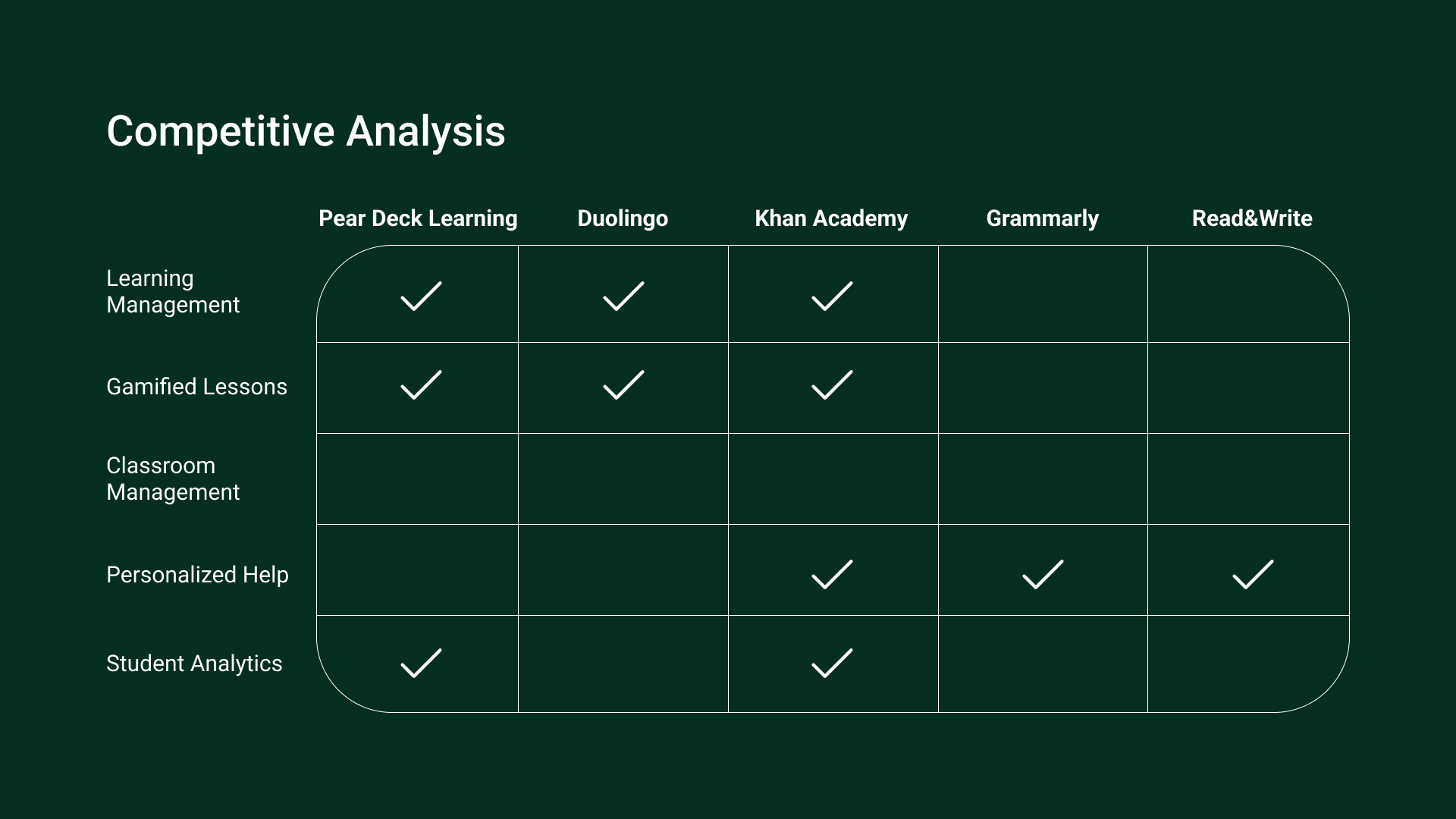
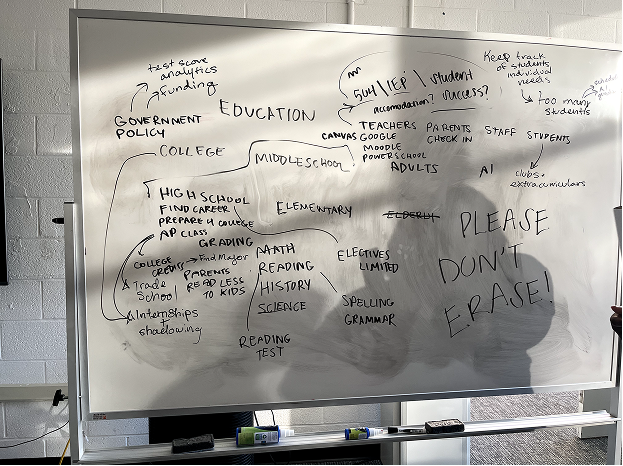
We started at the whiteboard, stripping away the noise of high-tech "features" to find the core friction. We deep-dived into platforms like Khan Academy and Pear Deck, but found a gap: many tools were too complex for a 3rd-grade workflow.
Our discovery? Simplicity is the only way to survive a school day. We focused our task flows on three "hero moments":
The Quick Glance: Can she see who needs help in under 5 seconds?
The Auto-Pivot: Can the system adjust homework difficulty without her manual input?
The Evidence: Can we turn raw data into a clear story of student growth?
The Solution
The result is a platform that feels like an assistant, not a chore. By weaving together Machine Learning (ML) and Generative AI, Homework Wizard does the heavy lifting:
Data Extraction: It "reads" student work to find patterns Mrs. Anderson might miss.
Adaptive Flows: It generates unique questions tailored to individual learning styles on the fly.
Clarity via Visualization: Instead of spreadsheets, we provide a visual dashboard that flags "outliers" instantly.
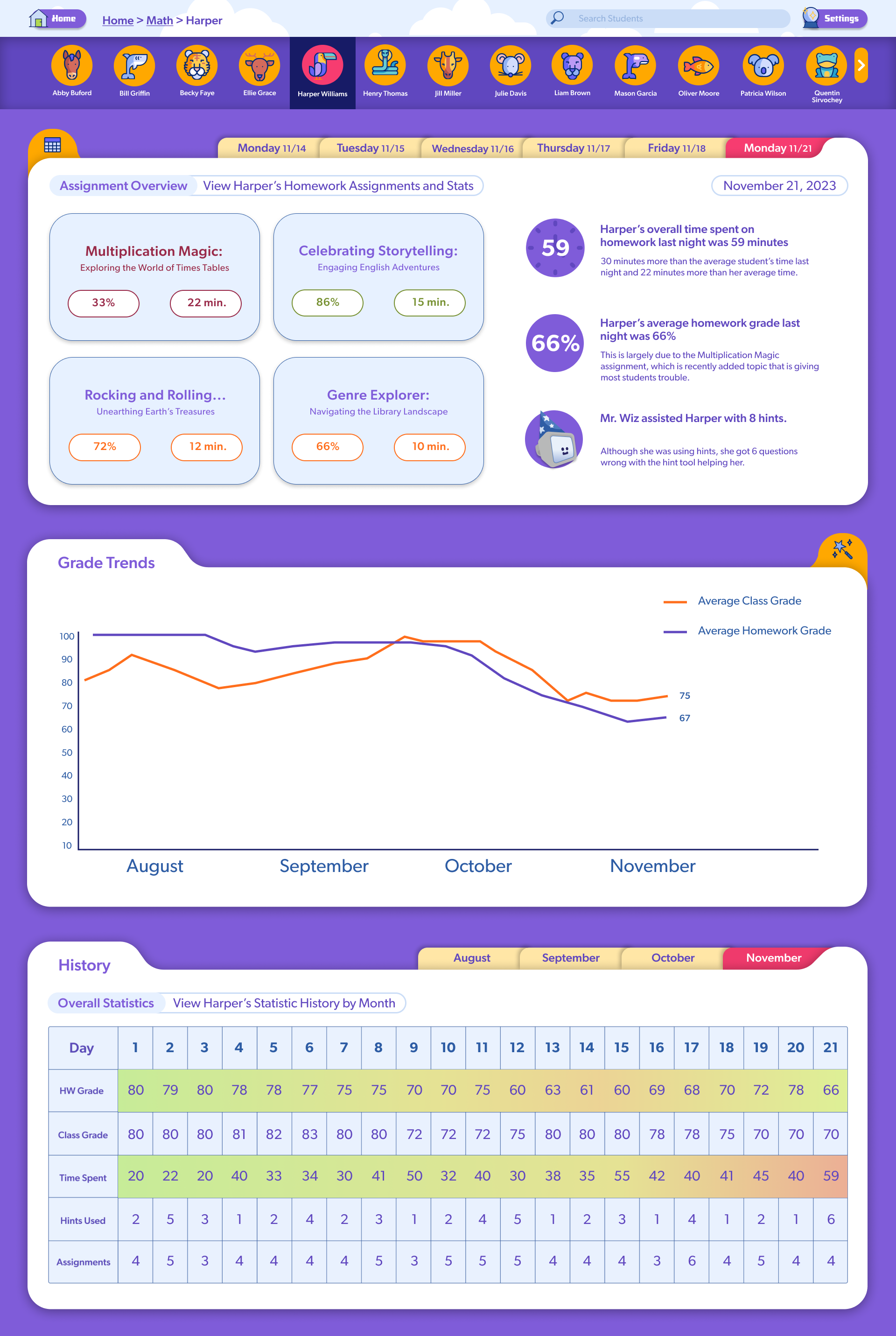
Profile of one of Mrs. Anderson's students. It includes statistics on the amount of time spent on homework, the overall percentage of the homework grade, and how many times the student selected Mr. Wiz, the AI assistant.
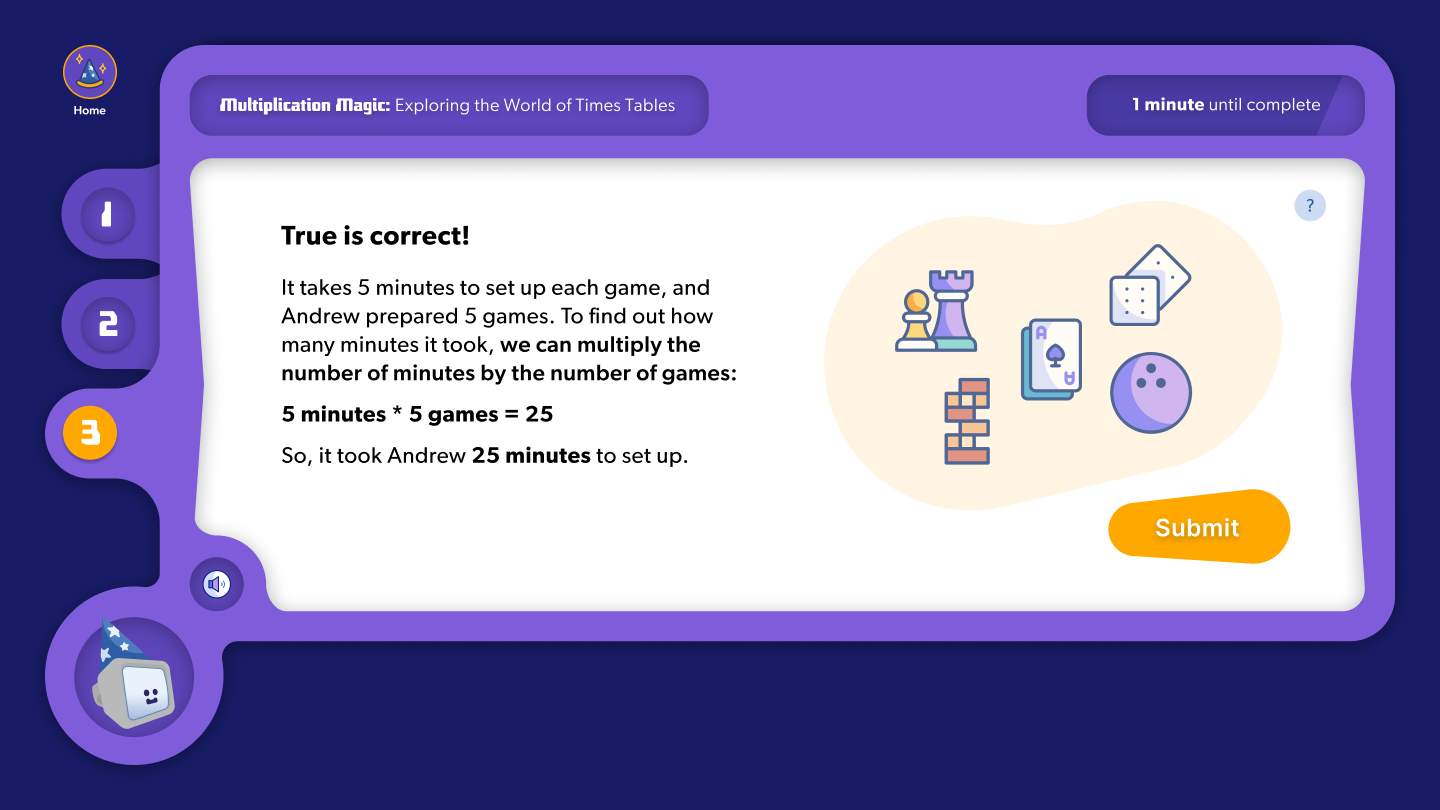
Student snippet of math homework.
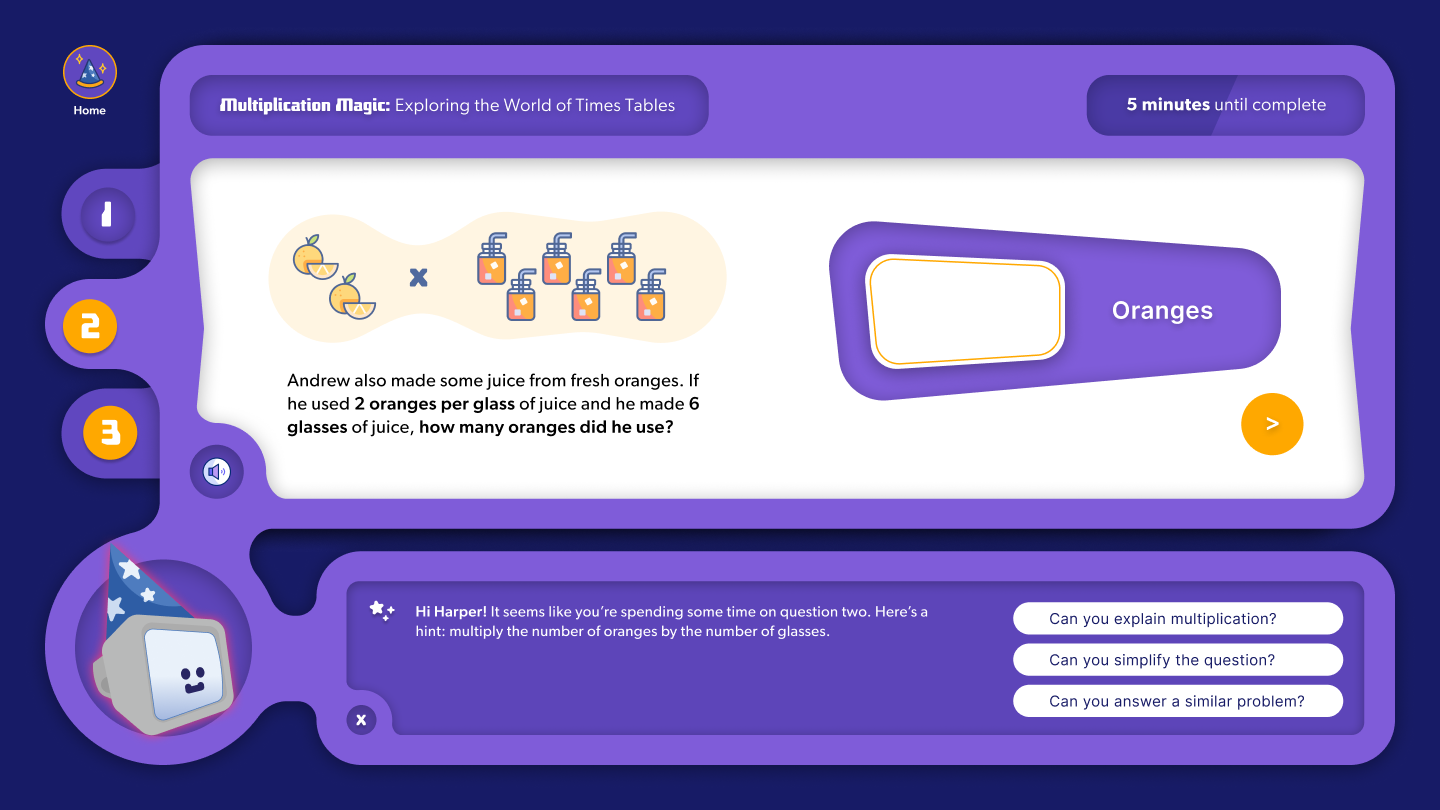
Student view of personalized homework. Mr. Wiz can be triggered to assist the student in finishing the current question, or if the student stays on the question for a while.
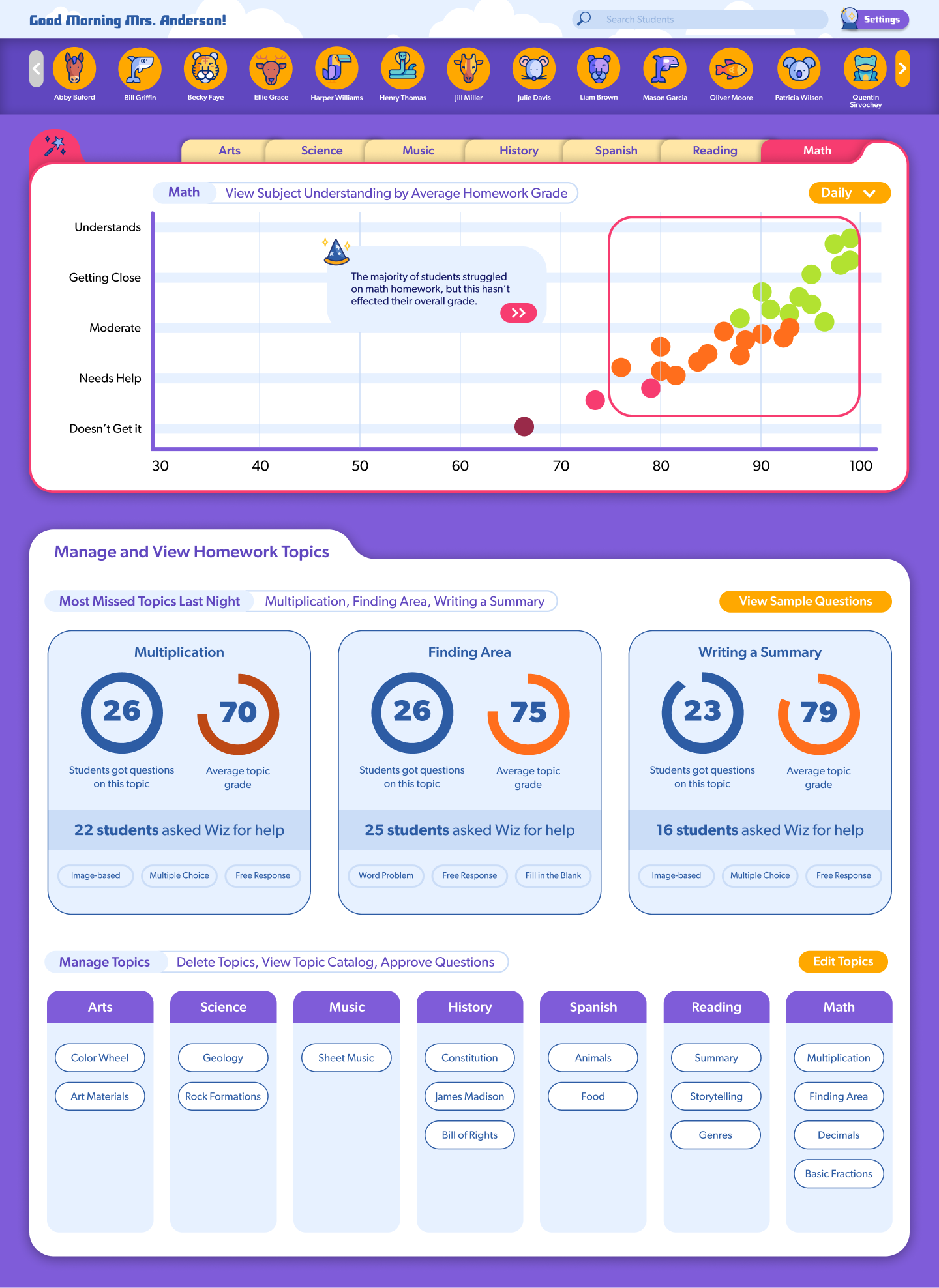
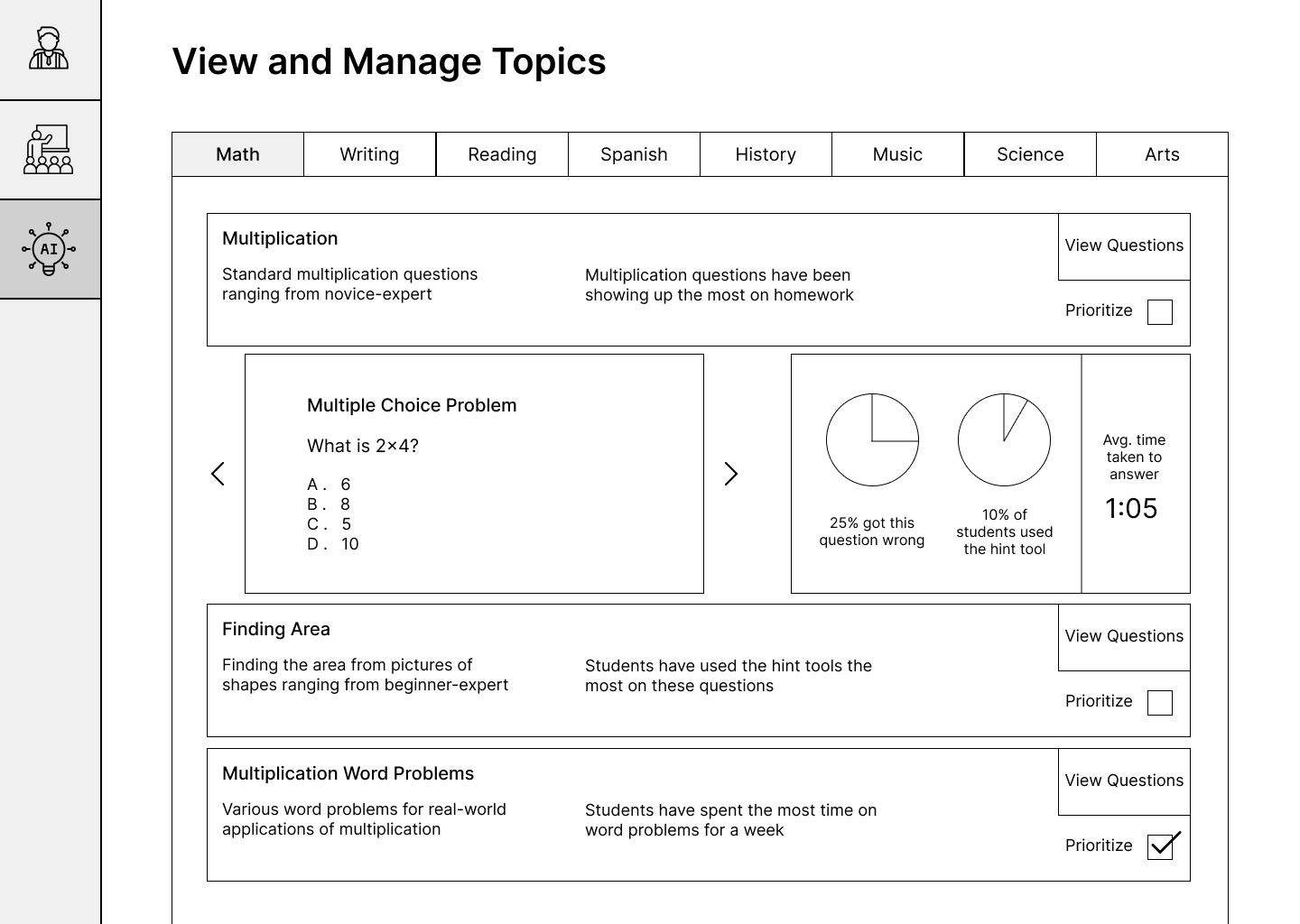
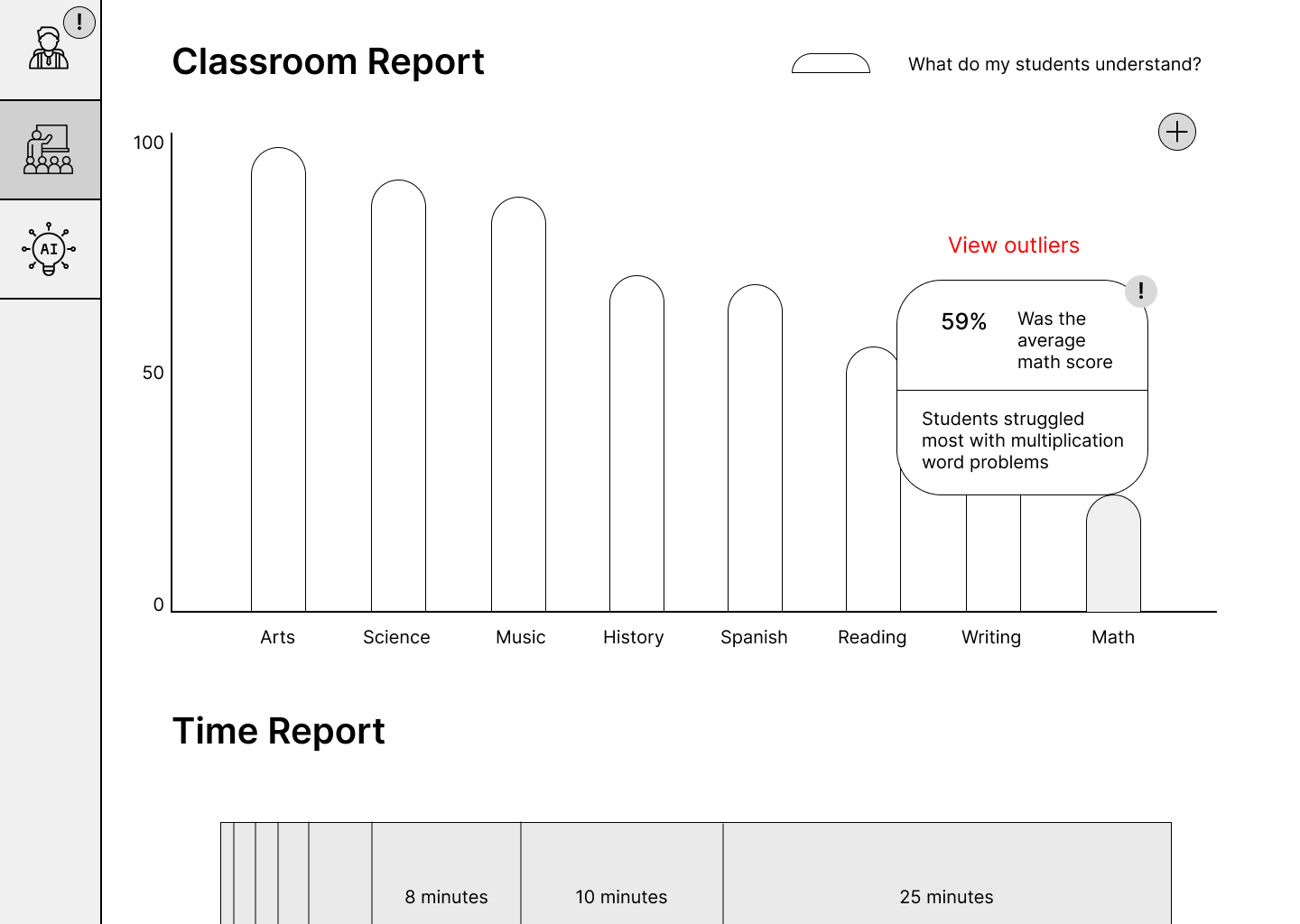
This is Mrs. Anderson's dashboard. The integration of AI allows her to see how well her students are performing in each subject. She can also access detailed insights, which helps her quickly identify areas that need attention. This automation enables her to efficiently monitor her students' progress.
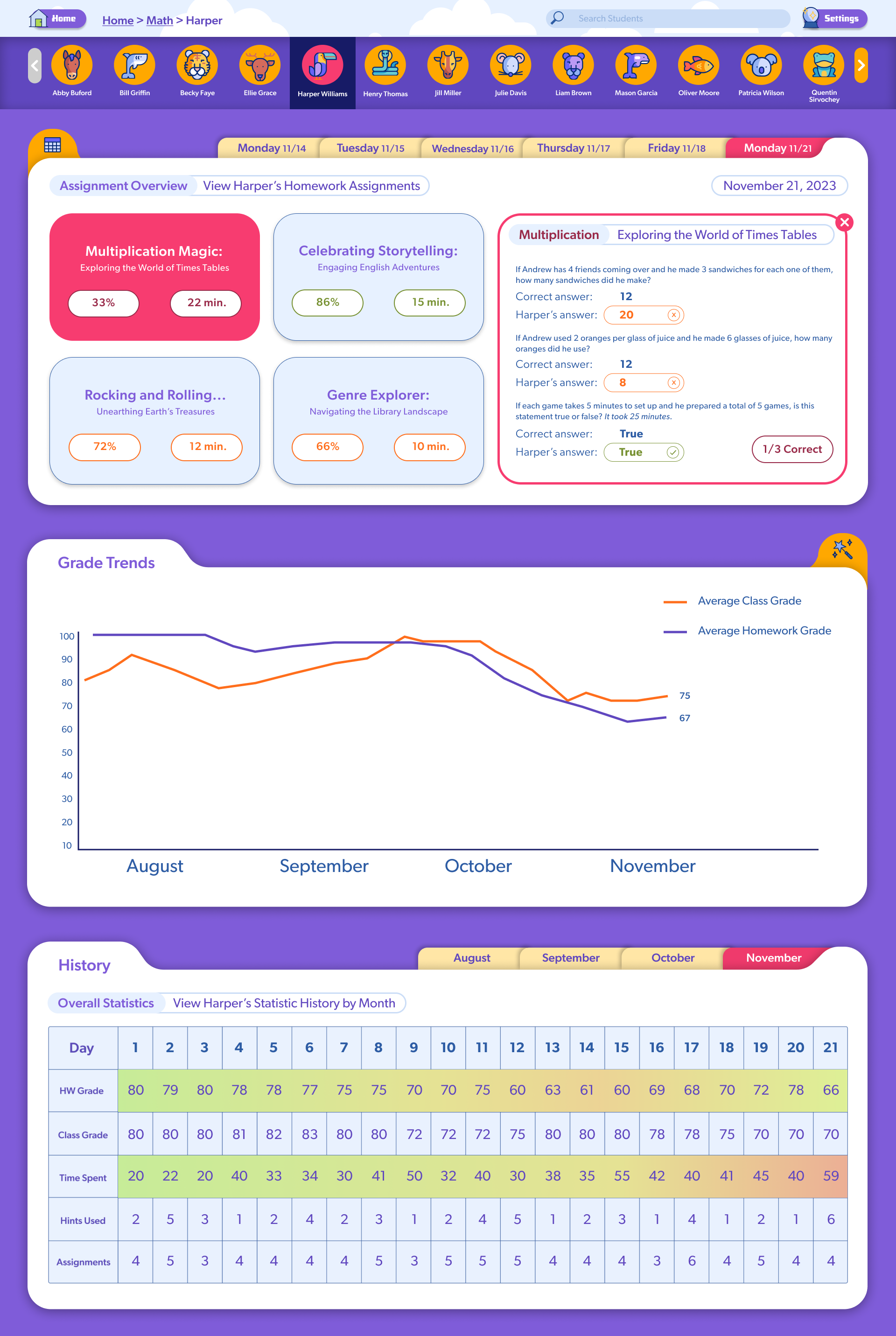
Mrs. Anderson can select any student in her class to view trends, grades, and how much time has elapsed for each subject, and the missed questions.
Outcome
By moving from physical handouts to a smart digital workspace, we didn't just organize the classroom, we saved the teacher. Mrs. Anderson no longer wonders who is struggling; she knows. The "constant workload" has shifted from administrative paper-chasing to meaningful, one-on-one student connections.
Future opportunities would include accessibility integration; therefore, students with accommodations can be successful in the classroom and on tests and quizzes.
Reflecting on this experience, I realize that teamwork, communication, and collaboration are essential. The amount of knowledge I gained was tremendous. This project pushed me to think about the user from start to finish, focusing on how to alleviate frustrations and strengthen my empathy skills.